Altitude's Silent Role in Shaping Outcomes for Mountain-Based Competitions and Their Associated Markets
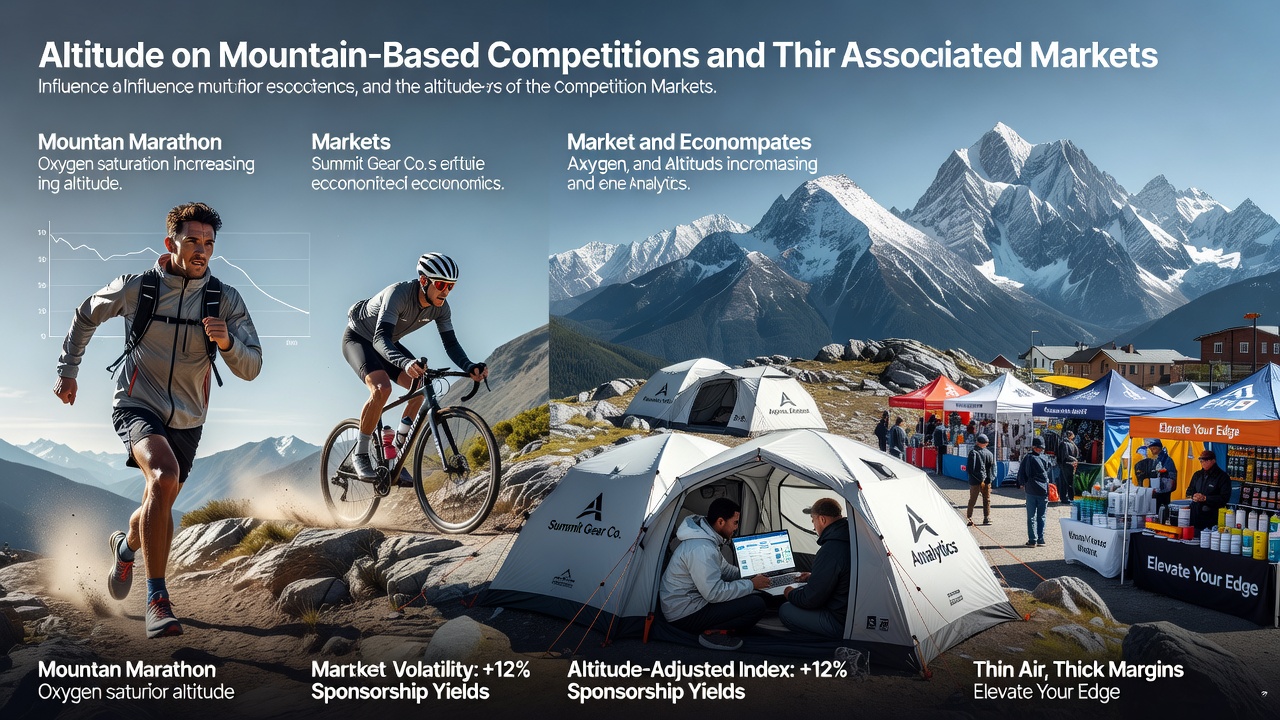
High-altitude environments exert measurable influence over athletic performance in mountain competitions, where reduced oxygen availability alters physiological responses and event results. Researchers at institutions across North America and Europe have documented consistent patterns in endurance events staged above 1,500 meters, showing declines in aerobic capacity that range from 7 to 15 percent depending on the duration of exposure and individual acclimatization levels.
Physiological Mechanisms at Play
Lower partial pressure of oxygen forces the body to increase ventilation rates and elevate heart output while red blood cell production ramps up over days or weeks. Studies from the University of Calgary demonstrate that athletes who arrive at altitude without prior adaptation experience immediate drops in power output during sustained efforts, whereas those who complete two to three weeks of pre-competition training at moderate elevations maintain closer to sea-level benchmarks. These adaptations do not occur uniformly; sprinters and technical specialists encounter fewer disruptions than distance competitors because their primary energy systems rely less on oxidative metabolism.
Impact on Specific Mountain Disciplines
Cycling stages in the Alps and Pyrenees provide clear illustrations of altitude's reach. Data collected during multi-day tours reveal that climbs exceeding 2,000 meters produce time gaps between top contenders that widen by an average of 12 percent compared with similar gradients at lower elevations. Running events such as the Jungfrau Marathon and Leadville 100 display parallel trends, with finish-time distributions shifting upward as courses gain elevation. Ski racing at venues like those used in the Winter Olympics shows subtler effects because events last only minutes, yet recovery between runs and training volume suffer when athletes remain at altitude for extended periods.
Market and Industry Ripple Effects
Equipment manufacturers adjust product lines to address demands created by these conditions. Apparel brands incorporate lighter, more breathable fabrics while nutrition companies expand offerings of iron-rich supplements and hydration formulas calibrated for increased respiratory water loss. Tourism boards in regions such as the Canadian Rockies and the Swiss Alps report that major summer competitions draw measurable visitor spending, with lodging occupancy rates rising 18 to 25 percent during event windows according to figures compiled by regional economic development agencies. Broadcasting rights and sponsorship packages tied to mountain events also reflect performance variability, because close finishes at altitude generate higher viewer engagement metrics than predictable outcomes at lower sites.
Evidence from Recent and Upcoming Events
Records from the 2024 and 2025 editions of several flagship races indicate that pacing strategies shift measurably once courses surpass 2,000 meters, with leaders adopting more conservative early splits to preserve glycogen stores. Organizers preparing for events scheduled in July 2026 have incorporated additional medical monitoring protocols and revised start-time windows to mitigate heat-altitude interactions that can compound dehydration risks. Academic reviews published in the Journal of Applied Physiology confirm that these adjustments produce measurable stabilization in dropout rates and medical interventions compared with prior years.
Training and Preparation Trends
National training centers in Australia and Norway now integrate simulated altitude chambers alongside traditional camps, allowing athletes to accumulate exposure hours without relocating entire support staffs. Longitudinal tracking by the Australian Institute of Sport shows that athletes who combine chamber sessions with on-site acclimatization achieve performance retention rates approximately 8 percent higher than those relying on natural exposure alone. These protocols influence team selection decisions and budget allocations within federations that target mountain competitions as priority events on annual calendars.
Conclusion
Altitude continues to function as an invisible variable that reshapes both individual results and the broader commercial landscape surrounding mountain-based competitions. Physiological data, equipment innovation, tourism revenue, and scheduling decisions all trace back to the same environmental pressure, creating interconnected effects that organizers and participants address through targeted preparation and resource allocation. As events in 2026 approach, monitoring of these patterns will remain central to understanding how outcomes unfold across the sector.