Circadian influences on multi-sport wagering: timing strategies for football matches, tennis circuits, golf events, and racing accumulators

Body clocks shape athletic output in measurable ways, and data from multiple studies link these rhythms to variations in speed, accuracy, and recovery across different sports. Observers note that performance peaks often align with an athlete's typical training window, while troughs appear in early morning or late night slots when core temperature dips and reaction times slow. Wagering markets adjust odds accordingly, yet timing strategies built around circadian data remain available for those examining schedules in football matches, tennis circuits, golf events, and racing accumulators.
Football match timing and circadian patterns
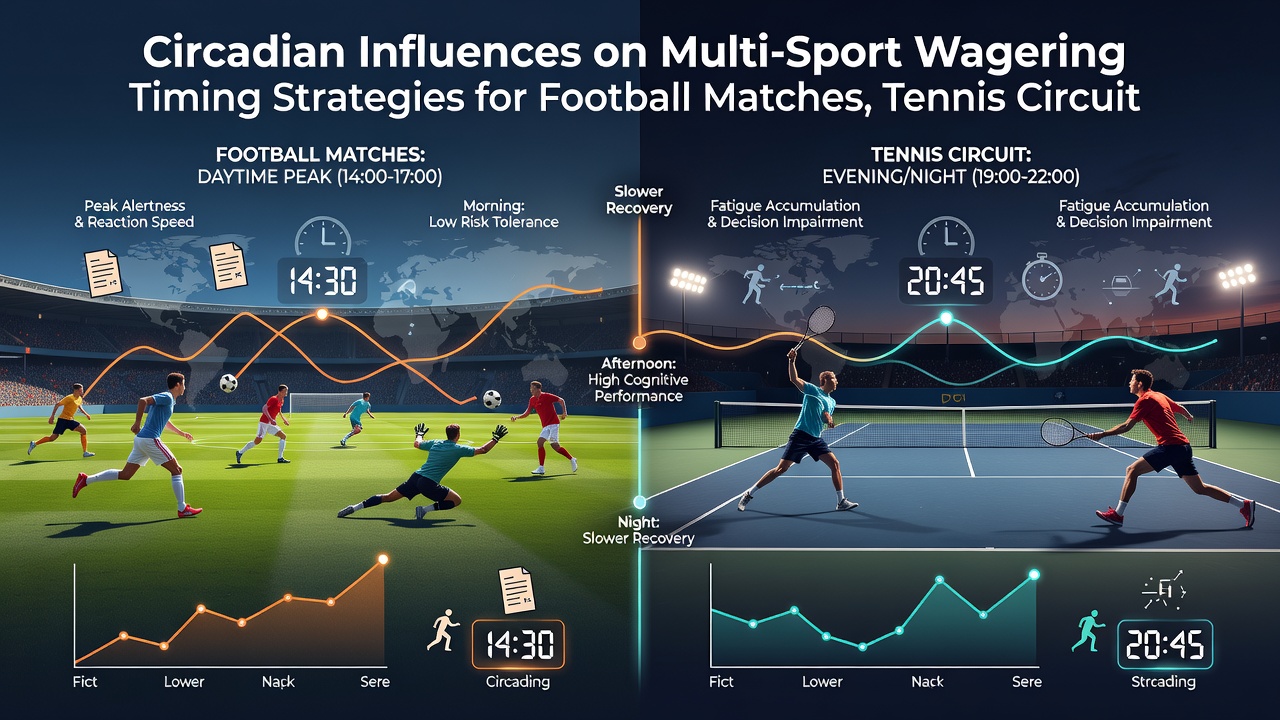
Evening kickoffs in European leagues frequently coincide with elevated testosterone levels in players accustomed to afternoon sessions, and records from domestic competitions show higher goal tallies after 8 p.m. local time compared with midday fixtures. Away teams crossing multiple time zones encounter documented disruptions in sleep architecture, which researchers have quantified through heart-rate variability measures taken before matches. In July 2026 several international friendlies will feature South American squads traveling to Asian venues, creating windows where circadian misalignment may widen performance gaps that betting lines initially understate. Data compiled by the American College of Sports Medicine indicate that teams playing within two hours of their biological night experience measurable declines in sprint distance covered during the final twenty minutes of play.
Tennis circuits and daily performance curves
Grand Slam schedules place early-round matches at 11 a.m. local time on outer courts, a slot that often disadvantages players whose peak alertness occurs later in the day. Longitudinal tracking of serve speeds across the ATP and WTA tours reveals consistent drops of 3-5 percent during morning sessions relative to evening sessions on the same surface. Night sessions under lights extend into periods when melatonin onset begins for many competitors, and match statistics demonstrate increased unforced errors after midnight. Those examining draw sheets note that players arriving from distant continents require three to five days for full circadian realignment, a period during which first-round results frequently deviate from pre-tournament rankings.
Golf events and early-round considerations
Early tee times on the first two rounds of major championships place golfers on the course before their circadian temperature minimum has passed, and shot-dispersion data collected by the PGA Tour show wider left-right spreads during the opening holes of dawn starts. Afternoon rounds allow players to reach their natural alertness window, correlating with improved proximity-to-hole metrics on approach shots. In July 2026 the Open Championship at Royal Portrush will feature split tee times that send later groups out during peak daylight hours, while early groups contend with cooler, damper conditions that compound any residual jet-lag effects from transatlantic travel.
Racing accumulators and daily scheduling
Thoroughbred and harness meetings publish post times that range from early afternoon to evening under floodlights, and speed-figure databases reveal that horses racing within their established circadian window post higher average times than those shifted by more than four hours. Jockeys and drivers also exhibit reaction-time variations that track daily cortisol curves, a factor reflected in starts-per-day statistics maintained by racing authorities. Accumulator builders who segment bets by session rather than by meeting capture edges when late-race fields include entrants whose connections have optimized travel and acclimatization routines. Australian Racing Board records demonstrate that horses returning from northern hemisphere campaigns require seven to ten days before their winning strike rate stabilizes at domestic levels.
Integrated timing approaches across disciplines
Multi-sport accumulators benefit when bettors cross-reference start times against published travel itineraries and historical performance splits. A single day in July 2026 might feature an evening Premier League fixture, a Wimbledon quarterfinal under the roof, a golf third round beginning at 2 p.m., and an evening race card at Ascot, each slot carrying distinct circadian implications for participants. Software that layers venue coordinates, athlete biographies, and prior results allows systematic identification of sessions where one side of a matchup holds a measurable biological advantage. Regulatory bodies such as the Australian Sports Commission have published guidelines on travel and scheduling that further inform these models without prescribing wagering tactics.
Conclusion
Circadian data supplies an additional layer of context for evaluating scheduled contests across football, tennis, golf, and racing. When start times, travel histories, and performance curves align, observable statistical patterns emerge that markets may price only partially. Observers who maintain records of these alignments across multiple seasons continue to refine timing filters that operate independently of traditional form or pace analysis.