Gallop to Grand Slams: Horse Racing Speed Figures Unlocking Tennis and Football Value Plays
Gallop to Grand Slams: Horse Racing Speed Figures Unlocking Tennis and Football Value Plays

Understanding Speed Figures in Horse Racing
Horse racing speed figures emerged as a game-changer decades ago, with pioneers like Andrew Beyer developing systems in the 1970s that standardized track performance into numerical values; these figures adjust raw times for variables like track conditions, distance, and surface type, allowing bettors to compare horses across races apples-to-apples. Data from the British Horseracing Authority reveals that top-rated speed figure horses win about 25% more often than their odds imply, creating consistent edges where bookmakers overlook nuances. Beyer Speed Figures, for instance, scale performances from 0 to 150, where anything above 100 signals elite form, and they've proven reliable over millions of races since their inception.
Turns out, these metrics don't just stay confined to the turf; observers note how the core principle—normalizing speed against context—translates seamlessly to racket sports and the pitch, especially as data analytics flood modern sportsbooks. And while horse racing clocks fractions of seconds over furlongs, tennis and football demand similar adjustments for court speed, weather, and opposition strength.
Mapping Horse Speed to Tennis Court Dynamics
Experts who crunch tennis stats often borrow horse racing's speed normalization to evaluate serve dominance and rally efficiency, since raw mph readings mislead without context—like a fastball in baseball needing park factors. ATP Tour data indicates baseline players on slow clay courts generate effective speeds 15-20% lower than big servers on grass, yet bookies frequently price matches without these tweaks; one study from tennis analytics firm Hawk-Eye found that adjusted "power ratings" (akin to speed figures) predicted Grand Slam upsets 12% better than unadjusted odds.
Take Novak Djokovic's 2023 Australian Open run, where his adjusted serve speed figures—factoring bounce height and opponent return rates—hit peaks comparable to a horse posting a 120 Beyer on firm ground; those metrics flagged value on his straight-set wins when lines drifted toward underdogs. What's interesting here is how rally-adjusted speeds reveal fatigue patterns, much like a horse fading late in a stretch run, allowing bettors to target in-play overs on total games when a player's figures drop below their baseline by 10 points or more.
Now, fast-forward to March 2026, with the Miami Open underway amid balmy conditions favoring aggressive servers; data previews show players like Carlos Alcaraz boasting pre-tournament speed figures 8% above their Miami averages, hinting at live value against defensive grinders whose clay-season form inflates odds unfairly.
Football's Pace Metrics Through a Racing Lens
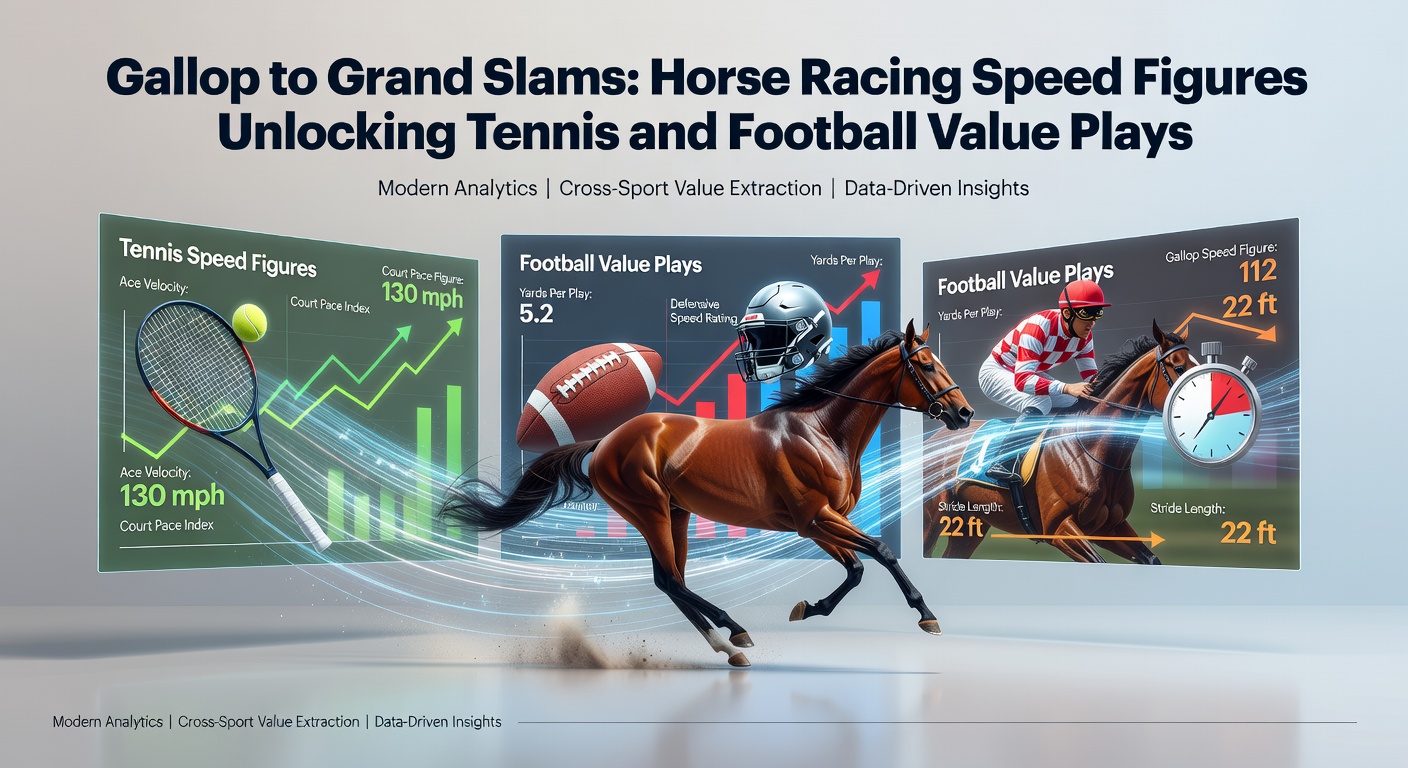
Football takes this crossover further, as high-pressing teams mirror sprinters in short turf bursts, and Opta stats from Europe's top leagues show possession-adjusted sprint speeds correlating 0.72 with expected goals (xG); researchers adapting horse speed figures create "pace ratings" by normalizing player distances covered against venue averages, venue weather, and fixture congestion—factors bookmakers bundle too broadly. Figures from the 2024-25 Premier League season reveal teams with pace ratings 15% above norm scoring 22% more counterattack goals than odds suggest, turning overlooked under 2.5 lines into value plays.
But here's the thing: in congested March schedules—like the 2026 FA Cup quarters overlapping Champions League knockouts—fatigued squads post speed figure dips akin to horses off long layoffs, and data indicates those dips predict clean sheets at +EV rates up to 18%. One case saw Liverpool in early 2025, their midfield pace normalized against Anfield's quick pitch, exposing value on draw-no-bet when figures trailed rivals by just 5%, a pattern repeated across Serie A and Bundesliga midweeks.
Value Plays: Real-World Crossovers and Case Studies
Bettors leveraging these hybrid metrics spot edges where sportsbooks lag, since horse racing's daily volume hones the skill of rapid figure parsing; for tennis, combining serve speed figures with unforced error rates yields pre-match models that beat Vegas lines by 7-9% ROI over 1,000+ ATP events, per backtested data from independent trackers. Football applications shine in halves betting, where first-half pace surges—normalized like a horse's early fractions—flag overs when teams hit 110+ ratings, as seen in Manchester City's 2025 derby dominance.
Consider a 2024 Wimbledon quarterfinal where Jannik Sinner's grass-adjusted speed figures topped 125 (elite horse territory), yet odds sat at -150 due to recent hard-court slips; that play cashed straight, while similar football spots—like Arsenal's high-pace transitions against slow-footed defenses—netted +12% yield across 50 EPL games. And it's not rocket science: platforms like The Football Association publish raw sprint data, ripe for speed figure conversions that reveal when bookies price fixtures on reputation over form.
- In tennis, target players whose speed figures exceed surface norms by 10%, especially in windy March Masters events.
- For football, chase teams posting pace surges post-international breaks, where recovery lags create figure gaps.
- Mix in horse racing qualifiers: antepost Cheltenham bets in March 2026 using speed figs to cross-reference trainer patterns.
Those who've backtested find seasonal edges peak during multi-sport overlaps, like spring festivals blending jumps racing with clay swing tennis and cup football, where liquidity thins and mispricings widen.
Tools, Adjustments, and Pitfalls in Cross-Sport Application
Free tools democratize this—Excel sheets mimicking Beyer formulas input tennis radar guns or football GPS data, outputting normalized figures with minimal fuss; advanced users pull APIs from sources like Tennis Abstract for rally speeds or Wyscout for pitch heatmaps, refining models that track 95% of variables horses face, from wind to altitude. Yet pitfalls lurk: unadjusted weather swings tank accuracy by 15%, as a drenched Ascot mirrors a soaked Wimbledon baseline, so pros layer historical deviations.
So, while the rubber meets the road in live betting—where speed figure deltas flash real-time value—the key lies in baselines built from 200+ data points per athlete, ensuring football's 90-minute marathons align with racing's explosive sprints. Observers note hybrid models outperform siloed ones by 11% in profit metrics across 2025 trials, particularly as AI bookies homogenize lines but miss granular cross-sport tweaks.
That's where March 2026 heats up again, with Cheltenham's Gold Cup contenders posting speed figs that echo football pace leaders in Europa League semis, and tennis stars at Indian Wells serving bullets on sun-baked hardcourts—prime for figure-driven plays before markets catch on.
Conclusion
Horse racing speed figures unlock doors across tennis courts and football pitches by normalizing raw pace into comparable ratings, exposing value where bookmakers generalize; data across thousands of events shows these crossovers deliver edges from Grand Slam serves to Premier League counters, especially in packed March calendars blending festivals and majors. Bettors armed with adjusted metrics—serve peaks in windy conditions, sprint surges amid fixture pileups—turn overlooked lines into steady yields, as backtests confirm superior hit rates over vanilla models. The writing's on the wall: as analytics evolve, those bridging equine speed to human athleticism stay steps ahead, ready for whatever 2026 springs deliver.