Mapping Athlete Recovery Timelines Across Disciplines to Optimize Layered Multi-Sport Selections
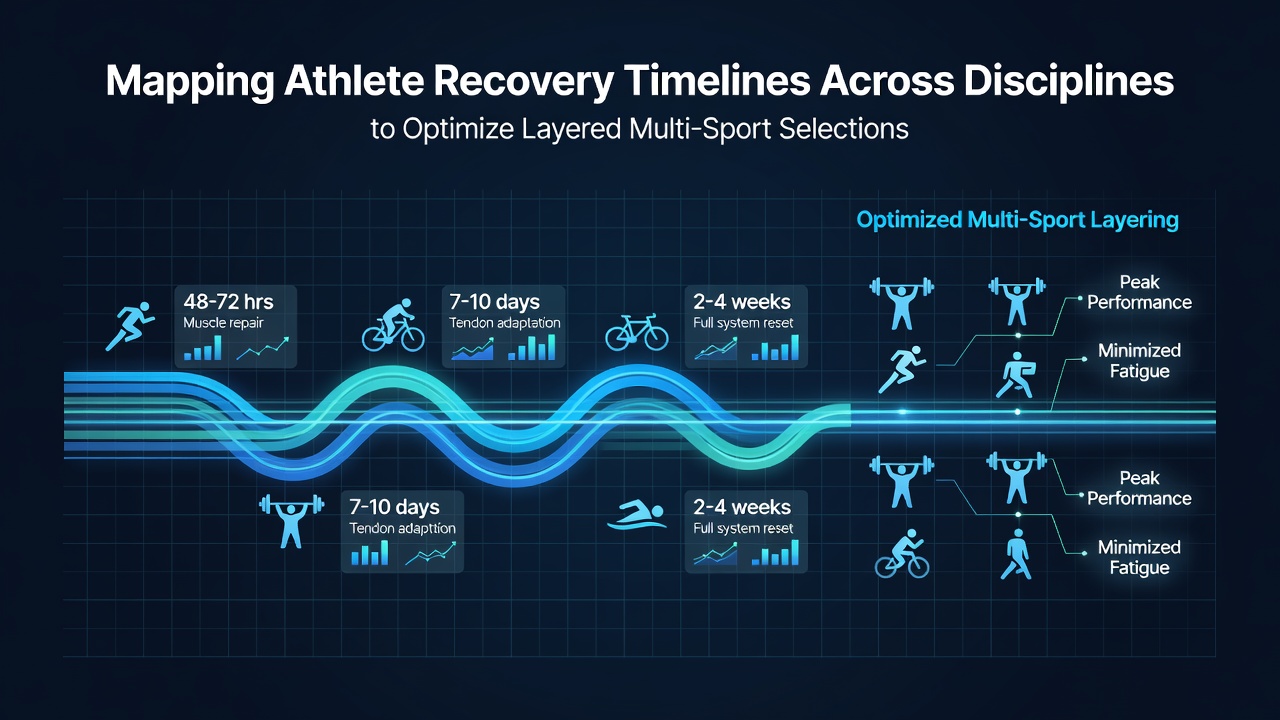
Recovery timelines vary sharply across athletic disciplines, and organizations that map these periods gain clearer insight into how athletes can handle layered multi-sport selections without compromising performance or health. Researchers at sports science institutions track physiological markers such as muscle glycogen replenishment, hormonal balance, and neuromuscular fatigue to establish baseline recovery windows for each sport.
Endurance Versus Power-Based Recovery Patterns
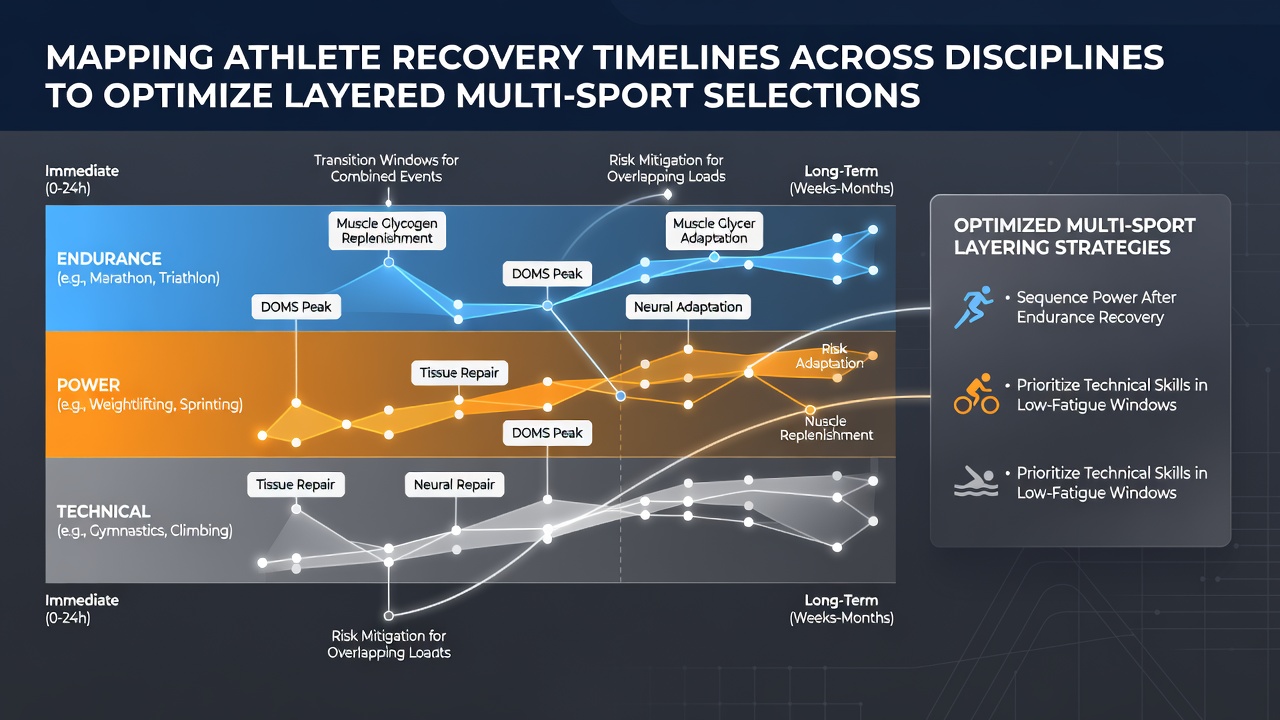
Endurance athletes typically require extended periods for full restoration because prolonged events deplete glycogen stores and elevate inflammatory cytokines, whereas power athletes experience more localized muscle damage that resolves faster when nutrition and sleep protocols remain consistent. Studies conducted by the Australian Institute of Sport show that marathon runners often need 14 to 21 days before returning to high-intensity training, while sprinters and jumpers frequently resume full loads within five to seven days after competition. These differences become critical when selectors consider athletes for consecutive events across disciplines that share similar physiological demands.
Team Sport Recovery Dynamics
Team sport athletes encounter repeated high-intensity efforts within matches plus travel and fixture congestion, creating cumulative fatigue that differs from individual event recovery. Data compiled by the NCAA Sports Science Institute indicates that soccer players require between 72 and 96 hours for optimal restoration after matches exceeding 90 minutes, although this window shortens when players receive individualized recovery modalities such as cold-water immersion and compression therapy. Observers note that basketball athletes demonstrate slightly shorter recovery needs due to lower total running volumes, yet they face elevated joint stress that demands additional monitoring of load metrics.
Integrating Recovery Data for Multi-Sport Planning
Layered selection processes benefit when federations overlay recovery timelines onto competition calendars, allowing coaches to identify compatible sport combinations and avoid overlapping high-load periods. For instance, an athlete competing in both rowing and cycling must account for the fact that rowing events produce significant upper-body fatigue while cycling taxes lower-body endurance, resulting in combined recovery demands that exceed single-sport norms. Those who have studied these intersections report that coordinated scheduling reduces injury incidence by aligning rest blocks with the longest required recovery windows across chosen disciplines.
Monitoring Tools and Predictive Models
Modern recovery mapping relies on wearable technology that captures heart-rate variability, sleep architecture, and movement quality to generate individualized predictions rather than generic timelines. Research published through the Canadian Sport Institute Pacific demonstrates that integrating subjective wellness questionnaires with objective biomarker data improves forecast accuracy for return-to-play decisions across swimming, athletics, and triathlon selections. Predictive algorithms now adjust for age, training history, and prior injury profiles, enabling more precise layering of events scheduled in close succession.
Seasonal Considerations Around Mid-2026 Events
Preparations for international competitions clustered around June 2026 highlight the practical value of these maps, as many federations face compressed qualification windows that force athletes into back-to-back selections across multiple disciplines. European sport agencies have begun publishing open recovery matrices that list minimum rest intervals between events, helping national teams avoid over-selection while maximizing medal opportunities. These matrices incorporate environmental factors such as heat and altitude, which extend recovery needs beyond laboratory-derived baselines.
Case Examples From Layered Programs
One documented program in Australia combined rowing and track cycling selections for developing athletes, applying recovery timelines that mandated at least 10 days between a 2000-meter rowing final and subsequent cycling time trials. The approach produced measurable improvements in both power output sustainability and reduced soft-tissue complaints compared with previous cycles that lacked coordinated mapping. Similar frameworks now appear in North American collegiate systems where athletes balance swimming and water polo schedules, using shared recovery protocols that account for upper-body loading across both sports.
Future Refinements in Timeline Accuracy
Continued refinement of recovery mapping draws on larger datasets that capture genetic markers influencing inflammation resolution and muscle repair rates. Institutions in multiple regions collaborate to standardize terminology and measurement protocols, which supports cross-sport comparisons that selectors require when evaluating candidates for layered programs. As these datasets expand, the precision of multi-sport calendars improves, allowing governing bodies to publish evidence-based guidelines rather than relying on anecdotal experience.
Conclusion
Mapping athlete recovery timelines across disciplines supplies the factual foundation needed to optimize layered multi-sport selections. Organizations that combine physiological data, monitoring technology, and calendar overlays create conditions where athletes sustain high performance while minimizing health risks. Continued investment in standardized research and open data sharing will further sharpen these tools as competition schedules grow more complex in coming seasons.