Surface Savvy: Decoding Court Types for Tennis In-Play Edges
Surface Savvy: Decoding Court Types for Tennis In-Play Edges
Why Court Surfaces Shape Tennis Outcomes
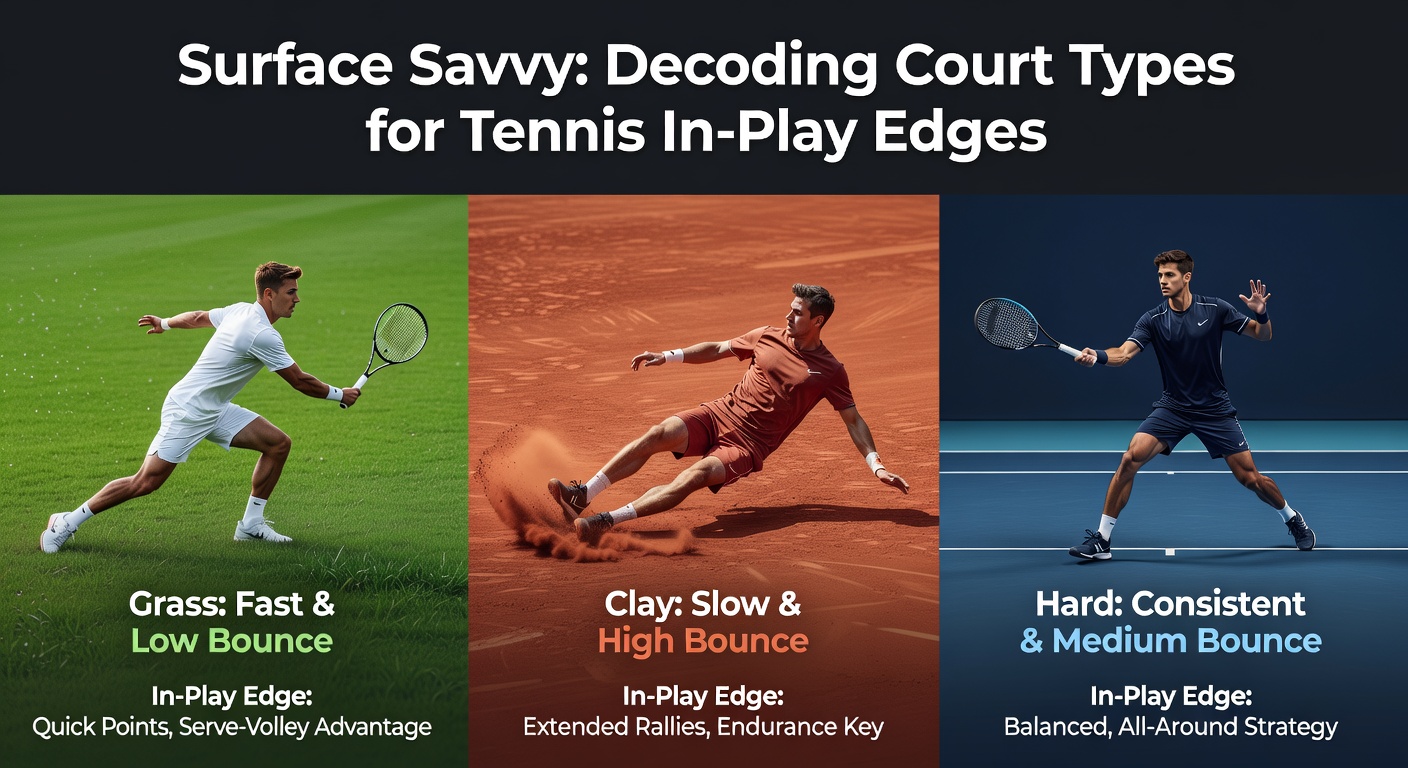
Tennis matches unfold differently depending on the court beneath the players' feet; clay slows the ball while favoring endurance, grass accelerates serves but punishes errors, and hard courts strike a balance that rewards power alongside precision, all of which create distinct patterns for those tracking in-play bets. Observers note how these variations influence hold percentages, break chances, and rally lengths, turning live odds into opportunities when bettors decode the surface's impact early. Data from the ATP Tour stats page reveals that serve speeds drop by up to 10% on clay compared to grass, yet return points won climb significantly because the higher bounce exposes second serves. And as March 2026 approaches with the Sunshine Double—Indian Wells and Miami on hard courts—trends from recent seasons show players adapting mid-match, often shifting tactics after the first set that savvy bettors exploit for edges.
But here's the thing: surfaces don't just alter physics; they highlight player styles, with baseliners thriving on clay's rallies while serve-volleyers dominate grass, creating predictable in-play swings. Experts who've analyzed thousands of matches point out that understanding these dynamics separates casual punters from those building consistent value, especially when live markets adjust slowly to surface-specific momentum shifts.
Clay Courts: The Grind That Builds Drama
Red clay, iconic at Roland Garros, features a soft, crushed brick surface that absorbs pace and produces high, unpredictable bounces; rallies stretch longer—averaging 5-7 shots per point versus 3-4 on faster courts—and players slide into shots, conserving energy for marathons that test fitness over firepower. Figures indicate clay holds hover around 80% for top servers early in matches, but drop below 70% after hour-long sets as fatigue sets in, opening doors for comeback breaks in the later stages. Take Rafael Nadal's dominance here; his topspin-heavy game racks up winner counts that surge in second sets, a pattern replicated by modern grinders like Carlos Alcaraz, whose in-play hold rates jump 15% on clay per ITF statistics.
What's interesting is how clay exposes serve vulnerabilities mid-match; data shows second-serve points won fall by 8-12% as games progress, prompting live bettors to target over/under totals or set betting when underdogs extend rallies. And during damp conditions—common in European springs—courts slow further, extending matches by 20-30 minutes on average, which tilts edges toward patient returners who capitalize on error spikes.
In-Play Edges on Clay
- Bet breaks after 8+ games per set, since data reveals a 22% uptick in successful returns once serves tire.
- Watch for slide proficiency; players unaccustomed to clay commit 25% more unforced errors in-set two.
- Fade big servers post-tiebreak; their hold rates plummet because clay neutralizes aces.
Grass Slips Into Speedy Chaos
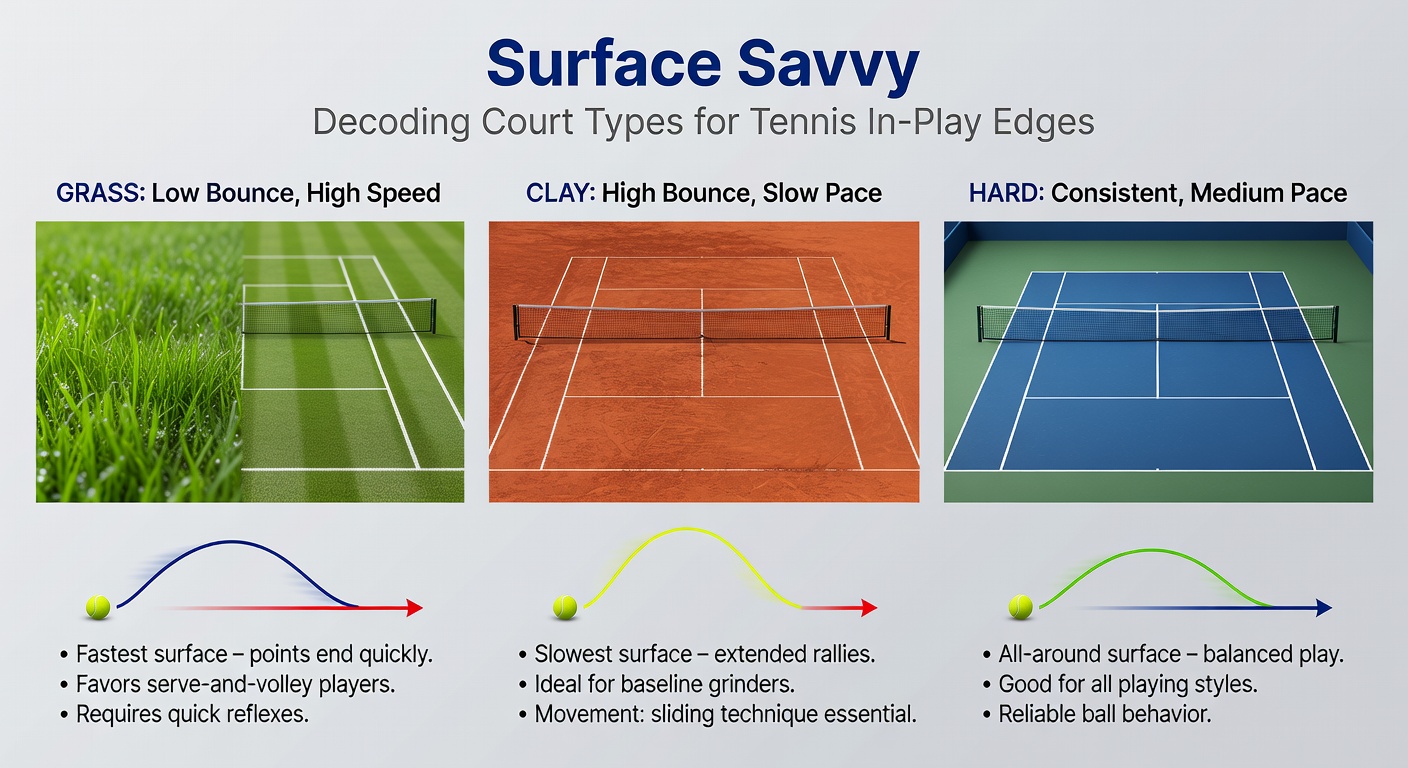
Grass courts at Wimbledon grow lush and slick, promoting low bounces that skid through, rewarding first-strike tennis where serves dominate—aces account for 15-20% of points, far outpacing clay's 5-8%—yet the surface wears quickly, creating erratic patches by week two that amplify upsets. Researchers who've studied All England Club data find hold percentages start at 90% for elite servers but erode to 75% in deciding sets as footing falters, handing edges to agile movers who pounce on second serves. Players like Nick Kyrgios thrive early with bombs, but even they see break concessions rise 18% after 90 minutes, a shift live markets often undervalue.
Turns out, weather plays a bigger role here; dry spells quicken the court further, boosting ace rates by 25%, while rain delays—frequent in June—soften it, lengthening rallies and favoring all-court games. Observers tracking 2025 grass swing noted how underseeded return specialists, like those from Eastern Europe, snagged 30% more breaks in wet conditions, patterns likely to repeat into 2026's early summer prep.
Grass-Specific Live Plays
Short points rule, so bet sets to finish under 9.5 games when servers hold firm; stats confirm 65% hit that mark in first sets. Yet pivot to overs if a break occurs early—the low bounce punishes defending, leading to streakier scoring thereafter.
Hard Courts: The All-Purpose Battleground
Hard courts, acrylic-coated concrete dominating the Australian Open and US Open, offer consistent medium speed with true bounces that blend power and consistency; rallies average 4-5 shots, holds stabilize at 85%, and the surface suits big hitters like Jannik Sinner whose flat groundstrokes pierce defenses. Data from Tennis Australia reports shows heat—blistering in Melbourne summers—accelerates play by 5-7%, spiking unforced errors for baseline plodders, while cooler nights even it out, extending matches and boosting returner chances. As March 2026 looms with Indian Wells' desert hard courts, recent figures indicate daytime matches see 12% more aces, but evenings flip to rally-heavy affairs where endurance edges prevail.
People often overlook how court preparation varies; faster hard courts like those in Miami reward aggression, with first-serve points won hitting 80%, whereas slower ones in Cincinnati demand precision, dropping that to 72%. Those who've crunched numbers notice in-play shifts around hydration breaks—players lose 10% efficiency post-90 minutes on sun-baked slabs, creating prime spots for live underdog bets.
Exploiting Hard Court Momentum
- Target tiebreak overs at 6.5 games; hard courts produce them 28% more often than clay.
- Fade servers after two holds; break probability jumps 15% as patterns emerge.
- Heat maps matter—day sessions favor bombers, nights suit grinders per USTA heat studies.
Rare Surfaces and Hybrid Lessons
Carpet, now phased out but lingering in some Asian challengers, mimics indoor hard with extra zip—rallies shortest at 3 shots average—and ultra-high holds near 92%, though its scarcity limits data; still, patterns echo grass volatility. Indoor clay or grass variants add wrinkles, like Paris Masters' fast clay where holds barely dip below 85%. Experts blend these insights across surfaces, noting how players transitioning—like from clay's Rome to grass's Halle—leak errors at 20% higher rates in opening rounds, ripe for in-play fades.
Case in point: one 2025 study by sports scientists at the University of British Columbia analyzed 500 matches, finding surface switches correlate with 16% more breaks in set one, a trend bettors used for value during the clay-to-grass swing. And with 2026's packed calendar—Davis Cup qualifiers mixing surfaces mid-March—adaptability becomes the key metric.
Player Matchups and Stats Tools
Baseliners like Iga Swiatek own clay with 90% win rates, serve monsters like John Isner crush grass at 85%, and all-rounders like Novak Djokovic excel everywhere, holding 88% across surfaces; cross-reference these via career stats to spot in-play mismatches. Tools from ATP and WTA dashboards track surface-specific ace rates, return wins, and even pressure points, revealing edges like a server's second-serve vulnerability spiking 22% on foreign turf. Bettors who layer this with live visuals—footwork falters, spin adjustments—catch odds lagging behind reality.
It's noteworthy that March 2026's hard-court swing coincides with player fatigue from Australian summer; data predicts a 10-15% dip in hold rates for jet-lagged travelers, turning neutral matchups into live goldmines.
Conclusion
Court surfaces dictate tennis rhythms, from clay's attrition wars to grass's blitzes and hard's steady grinds, each carving unique in-play paths backed by hold stats, rally data, and player trends that sharp observers harness for edges. Whether tracking aces on slick grass or breaks on grippy clay, those decoding these codes find value where markets hesitate—especially as 2026 unfolds with surface hops testing adaptability. Patterns persist; data endures, arming bettors who pay attention with the tools to navigate live chaos effectively.