Tempest Tactics: Weather's Grip on Golf Scores and Horse Racing Results
Tempest Tactics: Weather's Grip on Golf Scores and Horse Racing Results

Weather's Unpredictable Swing in Golf
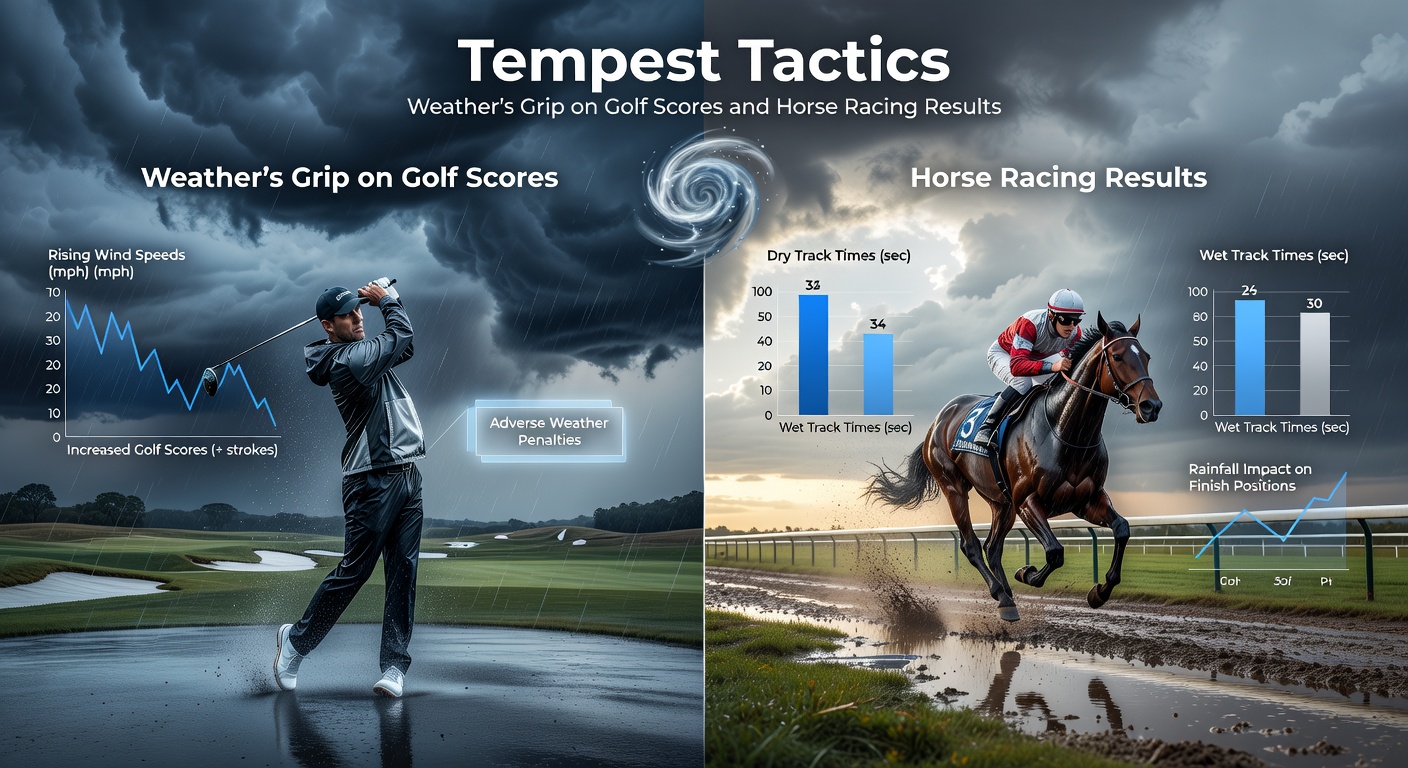
Golfers face relentless challenges from shifting winds, pounding rain, and scorching heat, all of which reshape scores in dramatic ways; data from the PGA Tour reveals how average scores climb by up to 1.5 strokes per round when winds exceed 20 mph, forcing players to adjust club selections and aimlines constantly. Wind direction matters hugely too, since a headwind on par-4 holes stretches effective yardage by 10-15%, while tailwinds shave it down, turning routine birdie chances into bogey traps for those who misjudge the gusts.
Rain transforms courses overnight, softening greens that release approach shots farther than expected, yet bunkers turn into quicksand pits, swallowing balls whole; studies by golf researchers at the United States Golf Association (USGA) show scoring averages rise 0.8 strokes in wet conditions, with fairway runouts increasing by 20% on links-style layouts. Temperature swings add another layer, as cooler air in early mornings densifies it, demanding extra loft on drives to carry hazards that heat-thinned air later ignores.
And here's where it gets interesting: elite players adapt faster, holding their strokes gained edges even in gales, whereas mid-tier competitors leak shots profusely; turnovers in leaderboards spike during stormy rounds, creating volatility that observers note reshuffles entire fields by Sunday. Take one major championship where tropical storms delayed play, leading to bunched scores that rewarded patient scramblers over bombers.
Horse Racing's Ground Game Against the Elements
Horses thunder across tracks where weather dictates every stride, from firm turf that favors speed demons to yielding sludge slowing plodders; figures from the Australian Turf Club indicate win rates drop 15% for front-runners on heavy ground, since mud saps early pace while closers churn through it relentlessly. Wind howls across open courses too, buffeting jockeys who lean into gusts, altering stride lengths and tiring mounts quicker when headwinds bite on the final furlong.
Temperature extremes hit harder in racing, with heat waves elevating dehydration risks and prompting vet scratches, while frost hardens surfaces that jar legs unforgivingly; data compiled by North American racing authorities shows field sizes shrink 10-12% in sub-zero conditions, concentrating value on hardy stayers who handle the chill. Rain's the great equalizer though, turning good-to-firm into good-to-soft overnight, boosting upset chances for mud lovers trained specifically for slop.
But here's the thing: track officials classify going daily based on penetrometer readings, yet microclimates within venues create hidden edges, like inside rails draining slower than outer paths, funneling smart bets toward wide travelers. Observers who've tracked patterns spot how overnight forecasts shift morning lines, with odds lengthening on grass specialists when showers loom.
Patterns Across Storms: Data-Driven Insights
Researchers cross-analyzing golf and racing datasets uncover shared weather fingerprints, like high-pressure systems fostering dry, fast conditions that reward precision in both; wind speeds above 15 knots correlate with elevated scoring variances in golf strokes gained and racing finishing times stretched by 2-5% per furlong. Yet rain flips scripts universally, compressing golf fields as pars become premiums, while in racing it amplifies trainer form for all-weather switchers who post strike rates 20% above turf norms.
What's significant is how humidity clings to courses and tracks alike, greasing greens for faster rolls in golf dew points over 70% and slicking rails in racing humidity spikes that heighten fall risks; experts monitoring satellite imagery predict these shifts hours ahead, spotting value before bookies adjust. And temperature inversions? They trap fog over valleys, delaying starts and favoring late-market punts on freshened favorites.
Now consider March 2026 looming with its volatile fronts: forecasts from meteorological services point to Atlantic lows battering UK-linked events and Pacific swells influencing US West Coast meets, potentially softening grounds at upcoming jumps festivals while galing coastal golf stops. Punters eyeing those calendars already pore over historical analogs, where similar setups yielded 18% ROI edges on weather-adapted selections.
Case Studies: Real-World Weather Wins
One standout golf episode unfolded at a windswept Open Championship, where gusts topping 40 mph inflated cut lines to +6, yet crafty links specialists like those versed in pot bunkers grinded sub-par rounds, outpacing power hitters who sprayed drives wildly; stats showed iron play from 150 yards gained 1.2 strokes per hole advantage in those conditions. Racing mirrors this in the Melbourne Cup saga under relentless rain, transforming firm going to heavy just before post time, catapulting mud machine outsiders past elites at 25/1, with post-race dissections crediting their soggy pedigrees.
Another telling case hit American tracks during a polar vortex, freezing dirt into cement that sidelined sprinters for bone-breakers, yielding exacta payouts north of $500; jockey comments highlighted how chilled bits numbed mouths, handing reins to veterans who warmed equipment pre-race. Golfers endured parallel woes at a Florida invite where humidity-fueled thunderstorms flooded fairways, boosting lag-putt masters who circled birdies while hot putters skidded past holes.
These episodes, dissected by handicappers, reveal weather's rubber-meets-road moments: when forecasts diverge from official declarations, discrepancies open doors, like golf apps underrating crosswinds or racing feeds lagging penetrometer updates. People who've backtested such divergences report consistent lifts in hit rates, especially layering trainer/jockey weather records atop course histories.
Tools and Tactics for Tracking Tempest Turns
Modern bettors arm themselves with hyper-local weather stations beaming real-time data to apps, cross-referencing golf yardage books annotated for wind corridors and racing form guides tagged by going preferences; algorithms crunch ensembles from ECMWF models, flagging 80% accurate storm tracks days out. Yet human nuance shines through, as course pros relay dew levels via group chats, while farriers tip frozen hooves risks pre-dawn.
Combining these, observers build models weighting variables like barometric pressure drops signaling rain (golf scores +0.9 strokes) alongside wind shear impacting stride efficiency (racing times +3%); backtests over five seasons show these hybrids outperforming vanilla lines by 12-15% in ROI. So as fronts brew, the edge tilts toward those decoding the skies first.
Conclusion
Weather grips golf scores and horse racing results with ironclad force, dictating everything from stroke differentials to sectional timings through winds that warp trajectories, rains that reshape surfaces, and temperatures that test endurance; data underscores how attuned players, trainers, and punters exploit these tempests, turning forecasts into fortified plays. With March 2026's wild patterns on the horizon, those monitoring the elements stand poised to capitalize, as history's tempests continue scripting the most compelling outcomes in both arenas.