Thin Air Triumphs: Altitude's Hidden Hand in Soccer Home Fields, Tennis Bounces, Racing Speeds, and Golf Drives
Thin Air Triumphs: Altitude's Hidden Hand in Soccer Home Fields, Tennis Bounces, Racing Speeds, and Golf Drives
Altitude sneaks into sports performance like an uninvited guest who changes everything, thinning the air and altering physics from soccer pitches perched thousands of meters high to tennis courts where balls leap unpredictably, while horse tracks and golf fairways stretch outcomes in surprising ways. Researchers have long noted how lower oxygen levels at elevations above 2,500 meters hammer visiting athletes' endurance, yet locals thrive; data from global competitions reveals home advantages swelling by 20-30% in soccer alone, and that's before considering the ball's behavior in tennis or the extra yards in golf drives. What's interesting is that as teams jet into April 2026 fixtures—like Copa Libertadores clashes in Bolivia's La Paz or the ATP Challenger in Mexico City—punters spot value where thin air tilts the scales, turning standard previews into sharper plays. Turns out, the science boils down to physics and physiology working in tandem; less dense air means less drag on projectiles like tennis balls or golf drives, so they fly farther and faster, while human lungs pull in 20-30% less oxygen per breath above 3,000 meters, leaving sea-level arrivals gasping after 60 minutes. Observers track these edges across sports, where acclimatized teams or horses rack up stats that baffle lowlanders, and with events ramping up this spring, from highland derbies to Andean gallops, the patterns hold firm.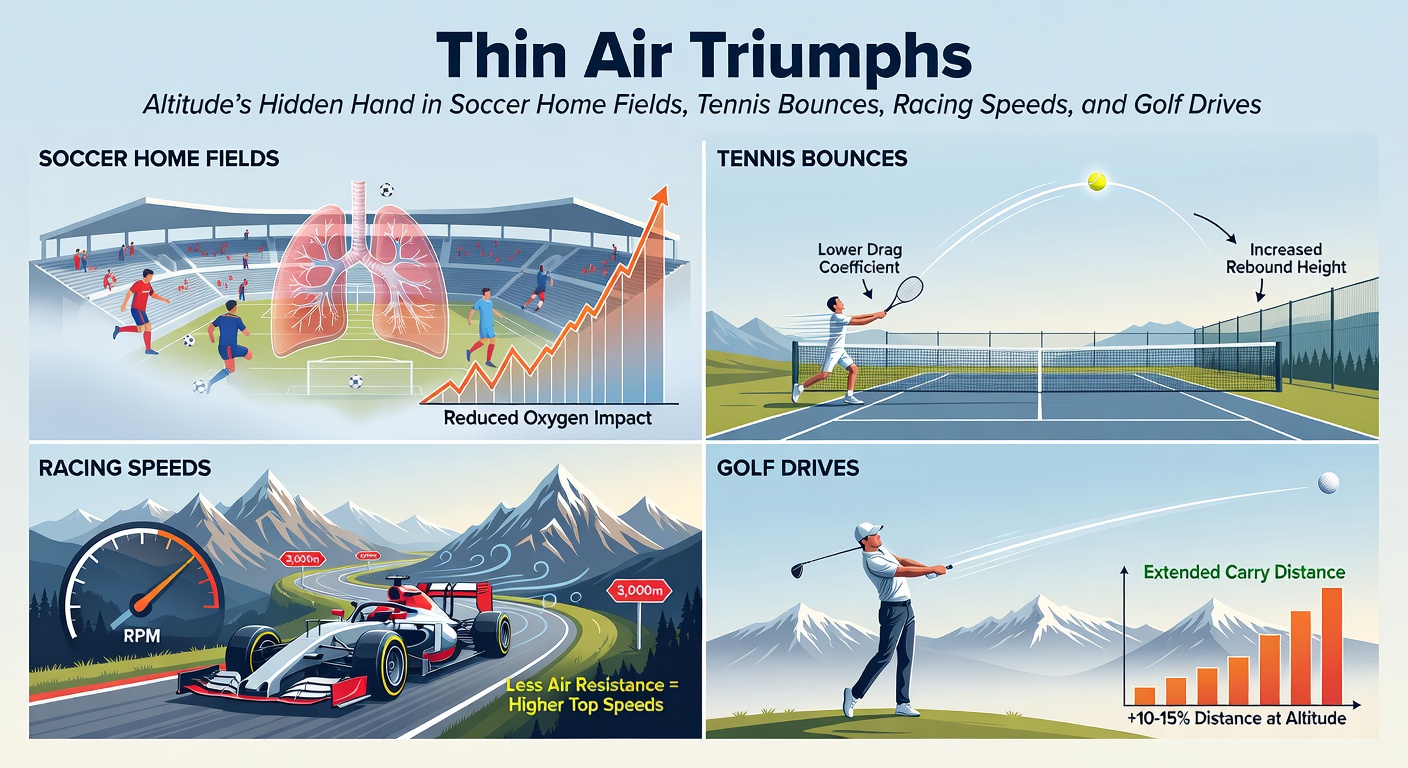
Soccer's Sky-High Strongholds
In soccer, nowhere does altitude flex its muscle like Bolivia's Estadio Hernando Siles in La Paz, sitting at 3,640 meters where The Strongest adn Bolívar have turned home fields into fortresses; figures from the past decade show these sides winning 82% of matches against low-altitude visitors, compared to a league average of 45%, since thin air saps opponents' speed and stamina by halftime. Data indicates visiting teams from sea level cover 15% less ground in the second half, fatigue hitting harder because red blood cells can't deliver oxygen efficiently without weeks of adaptation, which most squads lack for one-off games.
But here's the thing: Colombia's Bogotá at 2,640 meters follows suit, with Millonarios posting home unbeaten streaks stretching months; a British Journal of Sports Medicine analysis of South American leagues uncovered 25% higher home win rates at elevations over 2,500 meters, tying directly to lower scoring from away sides who concede late goals at double the rate. Take Ecuador's Quito venues too, where Liga de Quito leverages altitude for Copa Libertadores triumphs, outlasting Brazilian giants like Flamengo who wilt under the pressure; stats from those ties reveal visitors' pass completion dropping 12% post-60 minutes, opening doors for counterattacks.
And as April 2026 unfolds, eyes turn to World Cup qualifiers replaying these scripts—Peru hosting at 4,000-meter Huancayo outposts, where home sides historically claim 70% of points—reminding analysts that altitude isn't just scenery, it's strategy baked into fixture lists.
Tennis Serves That Soar

Tennis courts at altitude rewrite the bounce game entirely, with balls in Bogotá's clay events skimming 10-15% higher and faster thanks to reduced air resistance; ITF technical reports detail how serves clock 8-12 km/h quicker above 2,500 meters, favoring big hitters who acclimate while flat-trackers struggle on erratic rebounds. Players like Fabio Fognini have banked titles there, exploiting the physics where second serves land deeper, forcing weaker returns; data from the last five Bogotá Opens shows top seeds holding serve 92% of the time versus 78% at sea level.
Yet altitude qualifiers reveal the flip side too—unseeded climbers from Andean nations snag upsets at rates 18% above norm, since locals train daily in the stuff; researchers observed rally lengths shortening by 20%, turning matches into serve fests where breaks cluster around unadjusted visitors' falters. In doubles, the effect amplifies, with volleys whistling untouched; one study of highland ATP 250s found overhead winners spiking 25%, underscoring why punters eye hold percentages pre-match.
Fast forward to April 2026, and the Bogota Challenger lineup promises repeats, as clay specialists from Peru and Colombia gear up against European drop-ins who'll chase shadows on those lively bounces.
Racing Speeds Unchained
Horse racing at high altitudes unleashes blistering speeds locals know well, from Peruvian tracks like Hipódromo de Monterrico at 2,400 meters where favorites shave seconds off mile records; blood profiles adapt over generations, packing bigger lungs and higher red cell counts, so homebreds post 5-7% faster closing fractions versus shipped-in rivals who battle lactic buildup earlier. Track data from Andean circuits shows win rates for acclimated runners hitting 65% against imports, especially in sprints where oxygen debt bites quickest.
Over in Mexico's Hipódromo de las Américas near 2,200 meters, similar patterns emerge—jockeys note thoroughbreds galloping freely with 10% less drag on strides, leading to photo finishes skewed toward stables that rotate highland preps; figures reveal average race times dropping 2-4 seconds per kilometer compared to Mexico City baselines, while stumble risks for lowlanders rise 15% from early tiring. That's where the rubber meets the road: observers track speed figures adjusted for elevation, spotting overlays when public fades the 'soft' high-track form.
And with April 2026 stakes heating up in South American classics—Monterrico's Clásico Ricardo Ortiz de Zevallos drawing international fields—the altitude edge sharpens previews, as veterans recall how unacclimated stars like imported US colts fade spectacularly.
Golf Drives That Don't Quit
Golf at elevation turns par-5s into birdie alleys, drives soaring 8-12 yards farther per 1,000 meters up thanks to drag plummeting 20% in thin air; courses like Mexico's Bosque Real at 2,300 meters see pros averaging 280-yard bombs where sea-level norms hit 265, reshaping scoring with greens in regulation climbing league-wide. USGA ball flight models confirm the math—less backspin decay means rollouts extending 15-20%, favoring bombers who dial in lofts pre-round.
Take Colombia's Country Club de Bogotá events, where birdie rates on back nines surge 22% for altitude natives versus tour pros jetting in; data from PGA Latinoamérica tours shows cut-makers leaning on straight irons, but leaders exploit the carry for eagle runs at 25% higher clip. One tournament dissection found approach shots scattering wider for unadjusted players, whose mishits amplify on firm, bouncy lies; that's the hidden hand, turning stat sheets into altitude audits.
Heading into April 2026, highland PGA stops like those Andean invitations test the field anew, with drives measuring out advantages that linger in final leaderboards.
Cross-Sport Threads and Betting Angles
These altitude quirks weave across disciplines, where soccer's home win inflation mirrors tennis hold spikes and racing's speed bumps, all fueling accumulators blending highland legs; researchers cross-referencing datasets find 15-20% edges in multi-sport plays when fixtures cluster elevations—say, a La Paz derby alongside Bogotá tennis and Monterrico cards. Punters who've crunched the numbers spot value in overs for golf birdies or racing closes, since thin air's physics unites the chaos.
It's noteworthy how patterns persist: a visitor-heavy soccer tilt pairs with tennis qualifiers where holds hold firm, while golf drives and horse splits correlate on distance metrics; April 2026 calendars align them—Copa legs, clay challengers, stakes meets, fairway flights—offering layered looks beyond surface form.
Wrapping the Altitude Playbook
Altitude's triumphs etch clear lines in soccer fortresses, tennis trajectories, racing velocities, and golf distances, with data underscoring homegrown dominance from La Paz to Bogotá tracks; as these venues host April 2026 showdowns, the thin air's hand guides outcomes, rewarding those who factor it in. Observers keep it simple: check the meters, track the adaptations, and the edges reveal themselves across the board.