When the wind shifts: atmospheric conditions guiding cross-sport betting insights from football pitches to tennis courts and racing tracks
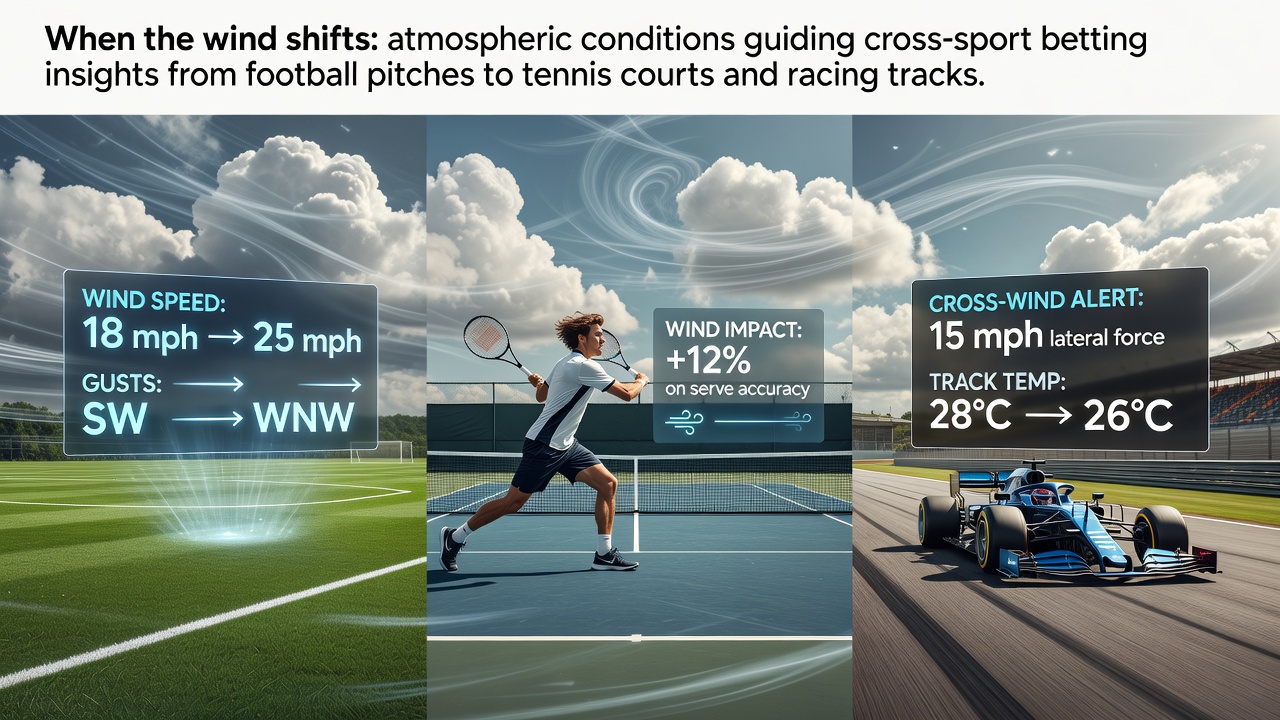
Atmospheric conditions shape outcomes across football, tennis and horse racing in measurable ways, and analysts track wind shifts because they alter trajectories, speeds and player decisions on a consistent basis. Data from weather monitoring stations near major venues shows that sustained winds above 15 kilometres per hour change ball flight in open stadiums while also influencing stride patterns on turf tracks. Observers note that these patterns repeat across different surfaces and disciplines, which allows cross-sport comparisons when bettors review historical performance logs.
Wind effects on football pitch dynamics
Football matches played in exposed stadiums register higher rates of long-range attempts and set-piece variations once wind speeds exceed typical thresholds, according to records compiled by European football federations. Teams positioned with the wind at their backs during the first half often record elevated crossing accuracy percentages, whereas those facing into the wind see pass completion rates drop by measurable margins. Researchers who examined match data from the 2025-2026 season across multiple leagues found that goalkeepers adjust positioning earlier when crosswinds exceed 20 kilometres per hour, resulting in fewer clean catches and more parried saves. These adjustments create predictable sequences that repeat across venues with similar wind exposure profiles.
Tennis court surfaces and air movement patterns
Tennis tournaments scheduled during periods of variable winds demonstrate clear differences in serve percentages and rally lengths, particularly on courts without substantial windbreaks. Statistics released by the International Tennis Federation indicate that players using flat serves into headwinds lose several percentage points in first-serve win rates compared with baseline conditions, while those employing heavier spin maintain closer to average figures. In June 2026, events on the European swing coincide with seasonal wind patterns that historically favour baseline rallies over aggressive net approaches, and analysts cross-reference these figures with earlier clay-court data to identify value in set-total markets. Wind direction also influences ball bounce on grass and hard courts because gusts alter the descent angle before impact.
Horse racing track conditions under shifting winds
Racing tracks experience changes in ground firmness and visibility when winds carry moisture or dry surface material, and records from Australian and North American tracks show that headwinds on the home straight correlate with slower overall times in sprints. Jockeys respond by altering pace judgment earlier in races, which produces different sectional splits than those recorded under calm conditions. Data compiled by racing authorities in multiple jurisdictions reveals that late chargers lose ground more quickly when tailwinds drop suddenly, because momentum built earlier dissipates faster than expected. These measurable shifts appear in both turf and dirt surfaces, allowing comparisons between race results and football or tennis matches played under similar wind regimes on the same calendar days.

Cross-sport data correlations and betting models
Analysts combine atmospheric readings from nearby weather stations with performance databases to identify recurring edges, and studies published in sports science journals demonstrate that wind-adjusted expected goals models improve accuracy when applied to football fixtures. The same datasets feed into tennis hold percentages and horse racing speed figures, because wind vectors affect projectile motion and equine effort in overlapping numerical ranges. Research groups at universities in North America and Europe have tested these multi-sport models using historical wind data from 2020 through 2025, and the outputs show tighter confidence intervals than single-sport projections alone. Bettors who incorporate these variables examine wind forecasts issued 24 to 48 hours before events, then adjust stake sizing according to the magnitude of predicted deviation from seasonal norms.
Regulatory bodies in Australia and Canada publish annual reports on weather-influenced sports outcomes that provide additional context for model calibration. These reports include average wind speeds at major venues and corresponding changes in scoring rates across football codes and racing meetings. Because the reports draw from government meteorological services rather than individual sports leagues, they supply independent benchmarks that reduce reliance on venue-specific measurements.
Seasonal timing and June 2026 considerations
June 2026 features overlapping schedules in football pre-season friendlies, tennis grass-court events and summer racing festivals, all occurring during periods when prevailing wind patterns shift from spring to summer regimes. Historical records indicate that these transitions produce more variable gust directions than mid-season months, which increases the frequency of measurable performance deviations. Analysts preparing models for that period review archived wind data from comparable calendar windows in prior years to establish baseline adjustments for each sport. The resulting overlays allow consistent application of wind-adjusted probabilities across accumulator selections that span multiple disciplines on the same weekend.
Conclusion
Atmospheric data supplies objective inputs that refine performance expectations in football, tennis and horse racing, and analysts continue to integrate wind measurements because they produce repeatable numerical effects across surfaces and formats. Records maintained by sports federations, meteorological agencies and academic researchers supply the figures required for model updates, while forecasts issued ahead of June 2026 events offer timely opportunities to apply those adjustments. Cross-sport comparisons remain possible because wind vectors influence ball flight, rally construction and equine effort within overlapping quantitative ranges that appear consistently in historical datasets.